Famed as the habitat for quokkas – the happiest animal on Earth – Rottnest Island welcomes 800,000 visitors annually. Just a 30-minute ferry ride off the coast of Perth, you would find yourself in a paradise brimming with sublime beaches, turquoise water, and an array of wildlife, which makes it a perfect day trip for snorkellers, swimmers, bikers, and nature lovers.
The most convenient way to go to the island is to hop on a ferry at Fremantle Port which is a ten-minute walk from the Fremantle station. I reserved a seat with the Rottnest Express online, but you can also choose another company named SeaLink. Though both of them have ticketing booths onsite, it’s highly recommended to book yours in advance to secure a seat. Tips: if you book with Rottnest Express, use code TELETHON to access special prices. And remember to pick up a map at the counter so you can plan out your traveling route on the ferry.
Most visitors explore the island by bike. You can rent one with the ferry company or head to Pedal & Flipper Hire (AUD30 for an adult bike, AUD71 for an electric bike) after you disembark. For those who don’t want to go on two wheels, a hop-on hop-off bus (AUD30 for adults, AUD22 for children) is also available to whisk you through 19 stops around the island.
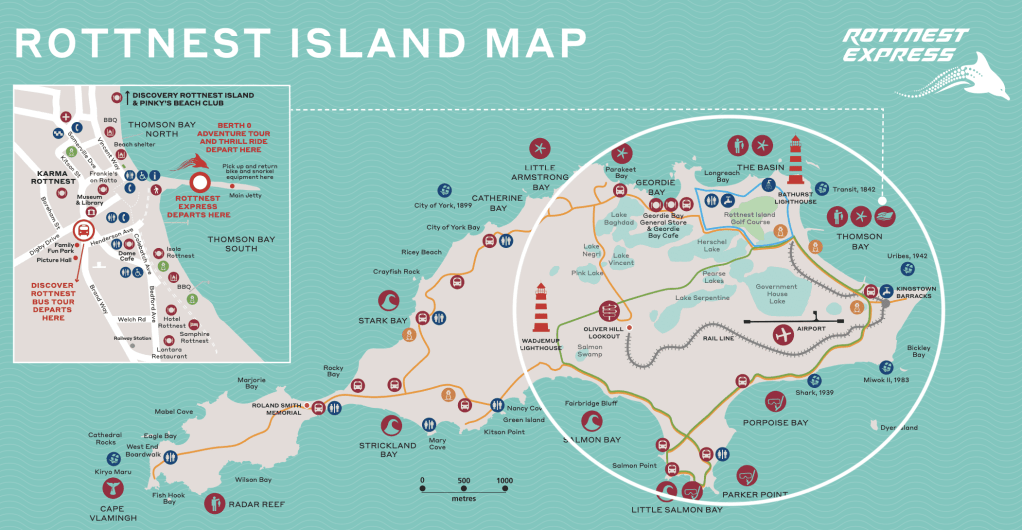
As we would like to spend more time on beaches, we only cycled along the circled area on the map above. Commuting on two wheels allows you to enjoy stunning scenic views under your own steam, but some of the slopes are pretty steep and require strong leg muscles and energy.
Within a 15-minute ride from the pier, we were amazed by the turquoise water at Henrietta Rocks, a perfect spot for snorkeling thanks to the extensive seagrass habitat that supports a diverse range of organisms. It’s a shame that we didn’t take a dip as the water was still cold in November.
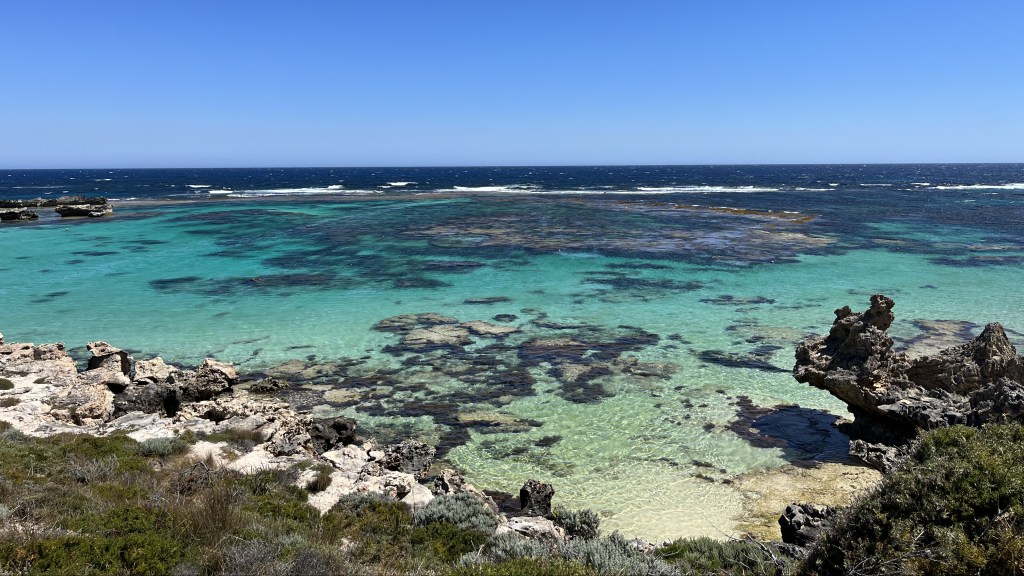
We then headed forward to Parker Point and sat down on the white sand beach, intending to enjoy our lunch. As there was no restaurant or tuck shop along the cycling track, we had packed some salad and cookies. However, several malicious seagulls were creeping towards us, forcing us to stow away our food. It may not be a suitable spot for a picnic, but the crystal-clear water and powdery sand will guarantee to take your breath away.
Our next stop is Little Salmon Bay, located at one of the southern tips of the island. The beach here is more crowded than the others as its sheltered location offers calm water for swimming. It also features a snorkel trail underwater with information panels about the sea creatures.
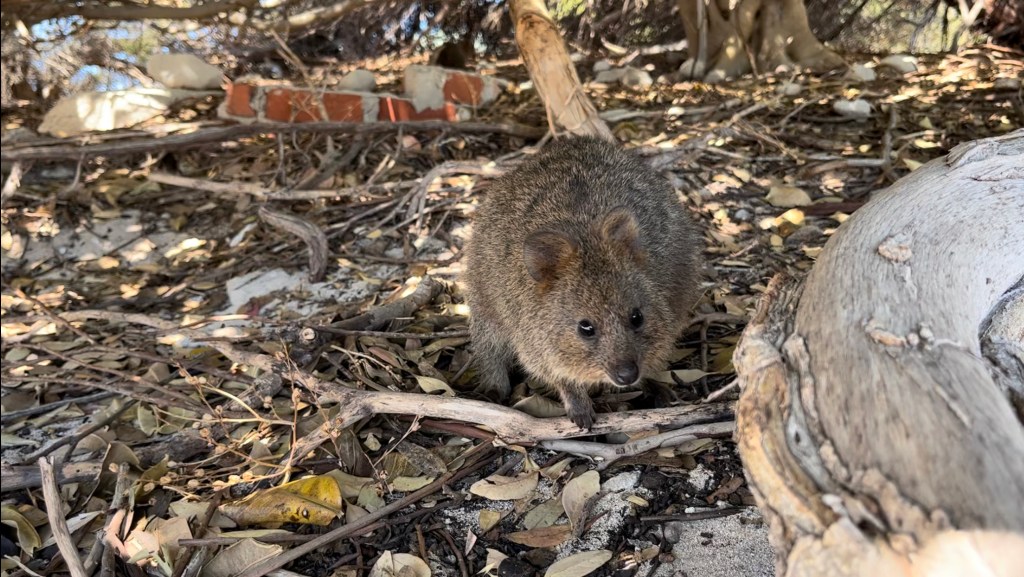
After taking in the splendid coastal views, we headed back inland for the Wadjemup Lighthouse, which was first constructed in 1849 to provide navigation assistance to ships sailing to Fremantle Port and the Swan River Colony. On our arduous way up to the lighthouse, we finally found two quokkas bouncing through the brush. The smiley face of this fuzzy marsupial is the main drawcard of Rottnest, which means “Rat’s Nest” in Dutch, named after a group of Dutch explorers who mistook this cute population as giant rats in the 17th century.
As the sun started setting, we made our return passing by the Pink Lake in the center of the island. The pinkish color of the salt lake is partly given by an algae called Dunaliella salina, which grows on salt crystals and contains a red-orange substance. Before catching our return ferry, we took a glimpse of The Basin, which is one of the most popular beaches on the island as it’s within 15-minute walking distance from the pier.
My friend and I have been searching for quokkas on my whole journey but we don’t have much luck. We later found out it’s easier to find them within the main settlement, where all the restaurants and shops are located, especially at dusk as quokkas are nocturnal creatures, mostly hiding when the sun is sizzling. So, if possible, book a later return ferry to spend more time with the happiest animal on the planet!
 Crystal on the journey