If you’ve read my previous story, you would have known that I took advantage of my layover time in Mexico City, catching a glimpse of the vibrant town at night and trying their national beloved spirit, mezcal. In this recount, I would talk about how I spent my last few hours in the city around the main square, Zócalo, before catching my afternoon flight to Los Angeles. The spontaneous itinerary involved visiting the oldest cathedral in the Americas, relishing remarkable mural arts by prominent Mexican painter Diego Rivera, and witnessing the Aztec traditional ritual of spiritual cleansing.
As time was at a premium, I woke up early for the sake of maximizing my exotic Mexican experience. The Mexico City Metropolitan Cathedral, aka the Metropolitan Cathedral of the Assumption of the Most Blessed Virgin Mary into Heaven, was my first stop. I was impressed by its architectural grandeur and exquisite façades from the previous night’s exploration. Located just a few steps north of the Zócalo, the cathedral is a monumental work built in an amalgamation of architectural styles encompassing Gothic, Baroque, Churrigueresque, and Neoclassical. The reason for the variations in design is due to its prolonged construction process that lasted across three centuries (1573 to 1813), during which fashion and preference changed between generations.
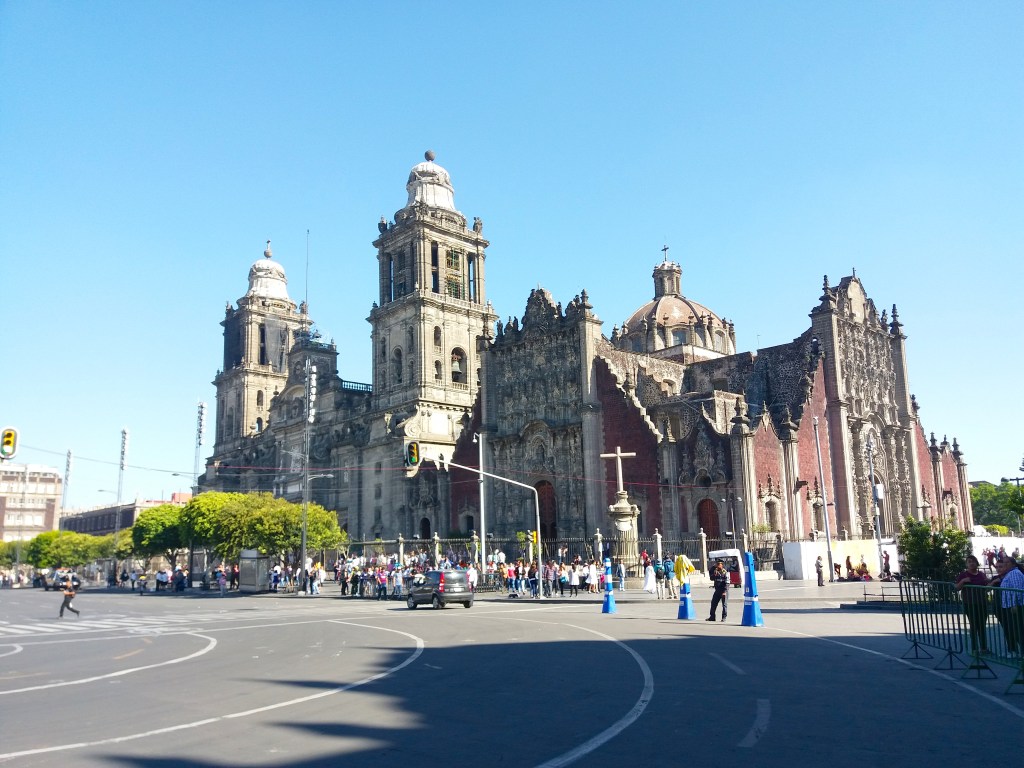
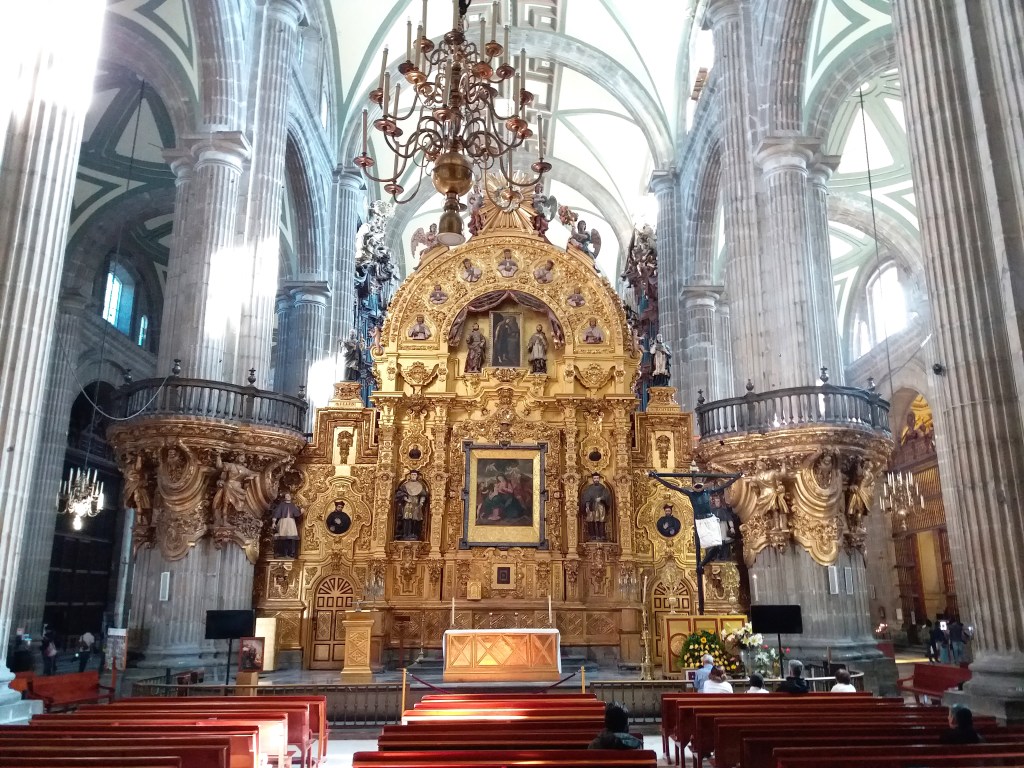
What caught my eye first was the ornate façade of the Metropolitan Tabernacle, which was constructed in Baroque style between 1749 and 1760. Under the theme of Eucharist, it’s decorated with meticulously-crafted Apostles, saints, cherubs, and fruit offerings. The formidable cathedral houses five naves and 16 chapels in total, each dedicated to a different saint. As I’m not religious, I only took a brief look at the interior, but what made me turn my head was the Altar of Forgiveness, which is beautifully finished in gold leaf. Situated at the front of the central nave, it’s one of the most important works of Spanish architect Jerónimo Balbás.
Roaming around the city center, looking for another point of interest on my map, a queue outside the National Palace diverted my attention. I went up to the security guard at the entrance to see if I needed a ticket to go in. The good news was it’s free of charge, but I needed to show my passport, which I had left in the Airbnb. Gladly, the apartment was close by, so I could easily make a trip back. This extra effort also made me look more forward to the visit.
Located on the same spot where the Aztec Empire built its palace in the 16th century, the National Palace now serves as the seat of the federal executive and the official residence for the President of Mexico. It’s also home to the Campana de Dolores, which Father Miguel Hidalgo rang to call for rebellion against Spain in 1810. To commemorate the independence, the president of Mexico would ring the bell and shout “¡Viva México!” on the balcony on the evening of September 15 each year.
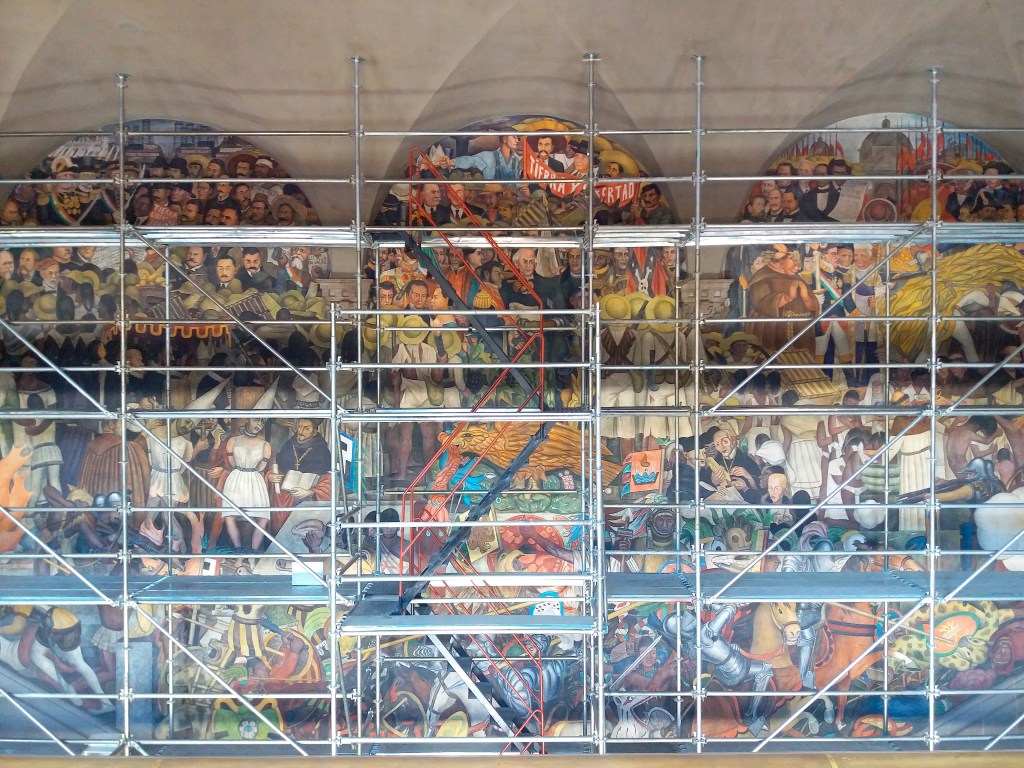
The National Palace is a great attraction itself but many tourists gravitate to this landmark for the famous, awe-inspiring “The Epic of the Mexican People” mural painted by Diego Rivera. Covering an area of 450 m² in the main stairwell and the walls of the second floor, the enormous mural is structured as a triptych, depicting the history of Mexico from ancient times to the Conquest and the early and mid-20th century. It’s a pity that the masterpiece was under maintenance with scaffolding against it, but I was still impressed by its size, details, and stories.
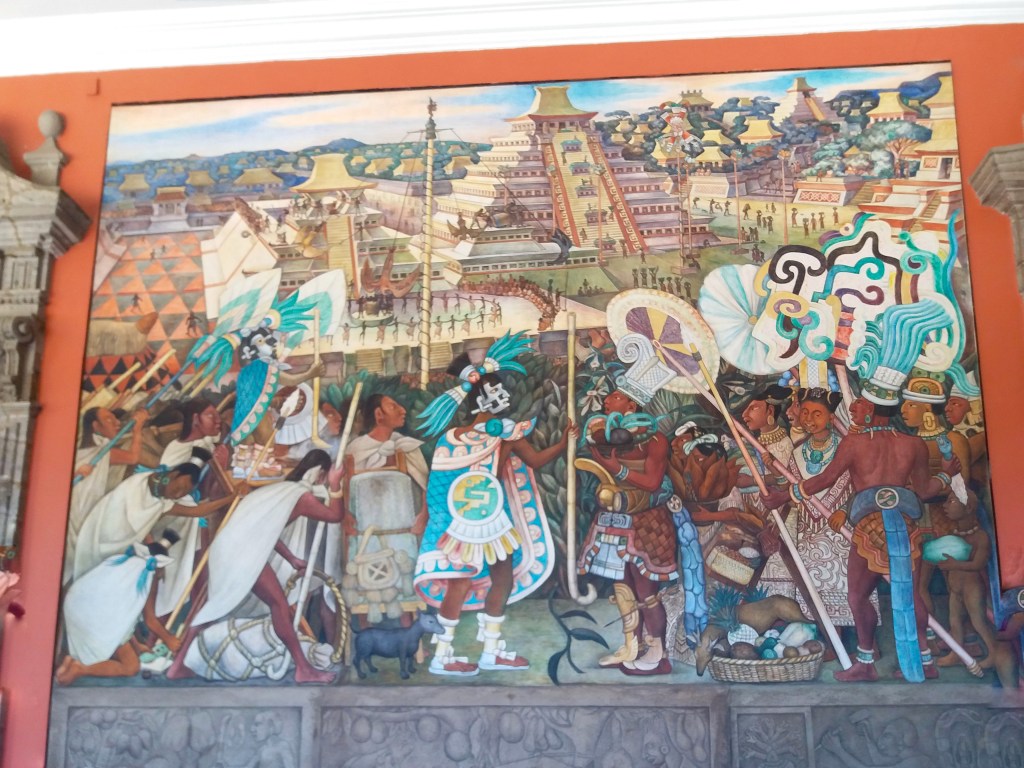
Walking inside the building, you can also find other interesting paintings by Rivera that illustrated the life of the indigenous people of Mexico. For example, the one below shows the commercial trade between Mexican merchants and the Totonaca group, which carry crops of the regions like vanilla and tobacco, in front of the Pyramid of the Niches in Tajin, Veracruz.
The Palace also housed a museum dedicated to Benito Juárez, a national hero and the 26th president of Mexico. The bedroom, living room and study that he and his family occupied from 1867 till his death were preserved, completed with some of his personal objects and documents. If you’re looking for somewhere to chill after the historical journey, take a stroll in the Botanic Garden, which is brimmed with a variety of succulent plants with Mexican origins.
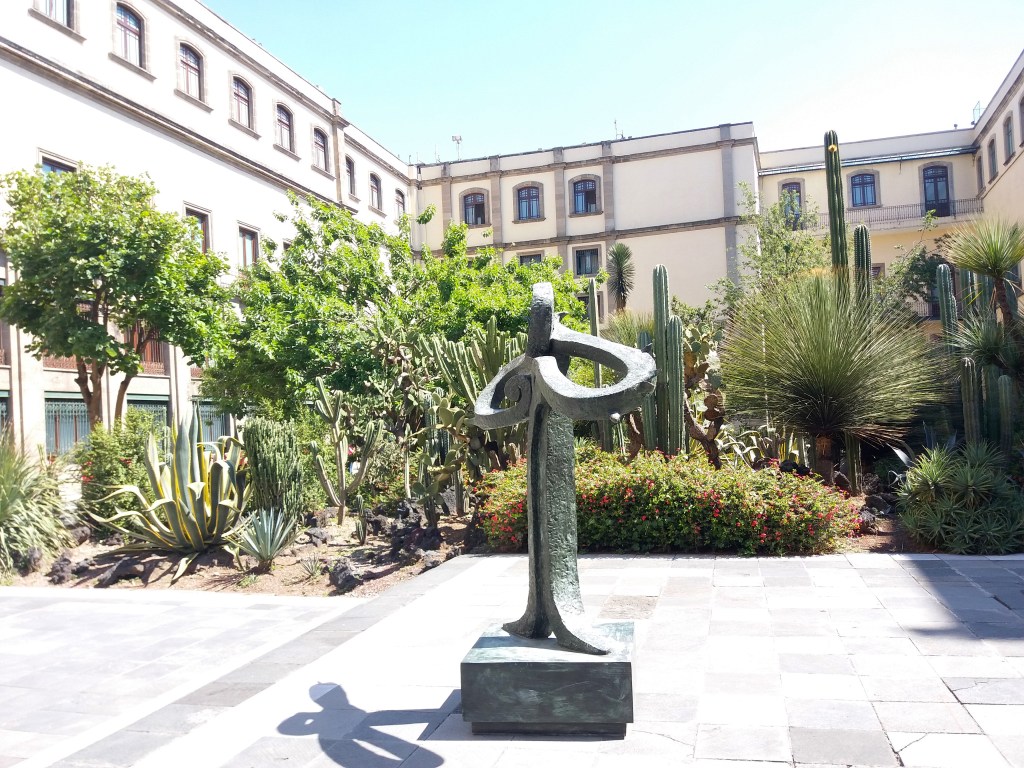
When it’s time to leave, I slipped my hand into my jeans’ pocket, searching for the tag to retrieve my backpack at the storage area. However, my pocket was empty. I was transfixed. Despite my poor Spanish, I tried to persuade the security guard that the blue backpack sitting lonely on the shelf was mine. Fairly, I failed and had to go through the lost and found procedure, passing through different department offices (which is kind of interesting if I wasn’t in a hurry) and signing several documents. Mercifully, the whole process took only half an hour and I was still on schedule for my departure flight.
Scurrying back to the Airbnb, I was distracted by a group of Aztec shamans dressed in ostentatious feather headdresses and colorful costumes. Some people were forming a line in front of a shaman, who was rubbing a pile of herbs on a woman’s body while blowing smoke in her face. I later learned that it’s a traditional spiritual cleansing ritual to expel evil forces from the human body.
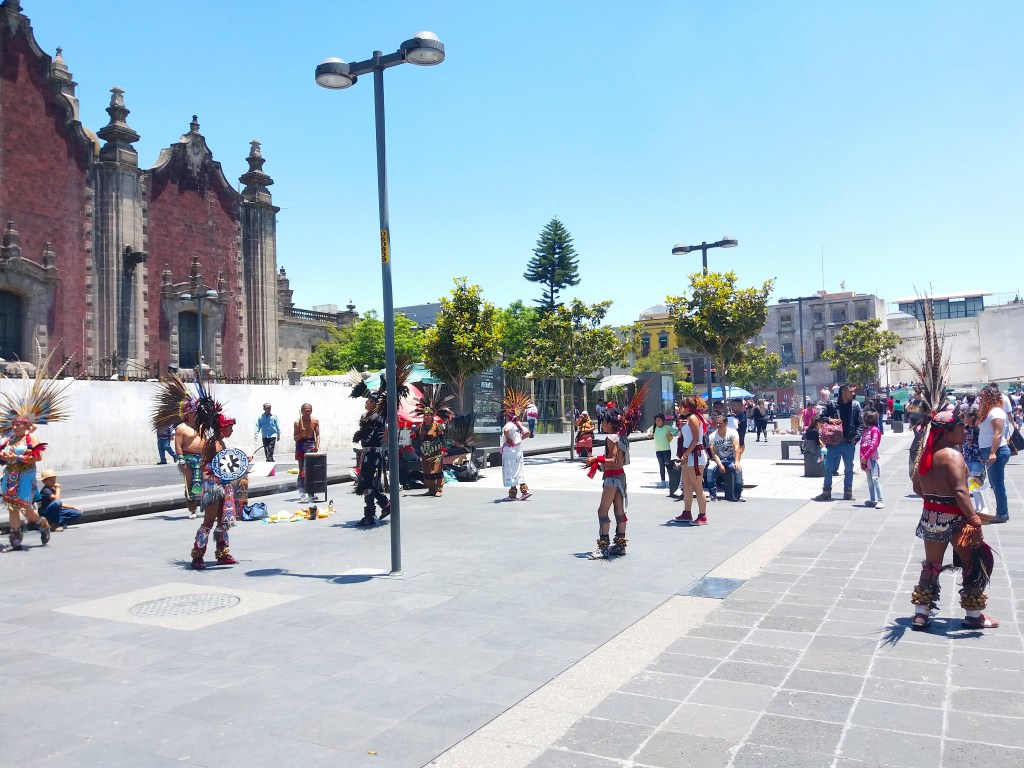
During the 24 hours, I’ve caught sight of the vibrant and cultural-rich side of Mexico City. As the pandemic ebbs, I hope that I could go back soon as there is so much more I would love to explore and share with those who are hesitant to visit this part of the world. With its delicious yet unpretentious cuisine, abundant art and cultural events, and friendly and affectionate people, there are more than enough reasons for anybody to stay there longer than a layover.
 Crystal on the journey