“When I told my friend I’m taking tourists to Dharavi, they’re shocked asking why I’d show them the slum,” Our tour guide Mohammed said. One of the largest of its kind in the world, Dharavi has been a popular attraction of Mumbai – the financial center of India – since the tremendous success of Slumdog Millionaire. To feed our curiosity about the setting of the award-winning movie and catch a glimpse of the Indian culture, we joined a day tour of Mumbai earlier this year before Coronavirus strikes hard.
Having a size of almost two-third of Central Park, Dhavari has almost one million population. “Some people think the slum is home to the poorest in the city, but it’s not the case,” Mohammed said. Though the appearance of the buildings looks shabby and deteriorated, some of the flats are well fitted with appliances like television and fridges. Residents also have access to 24/7 electricity and a few hours of water supply a day. While the living condition of the slum is getting better, there’re always things left to be tackled. “The biggest problem here is sanitation. There’re only about 700 communal bathroom facilities to be shared.”
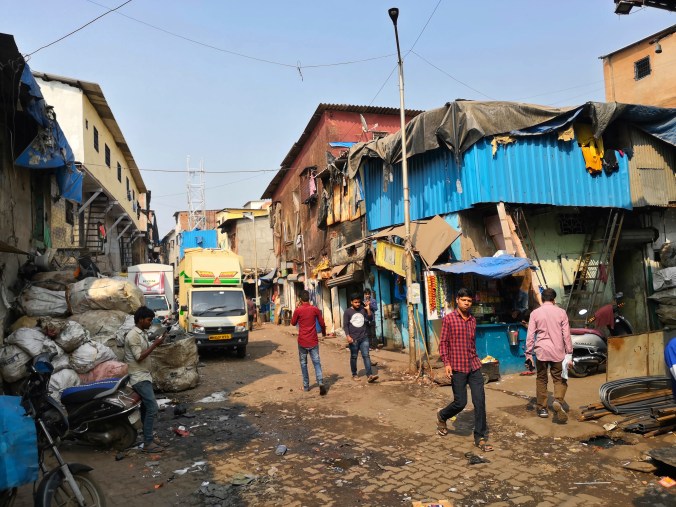

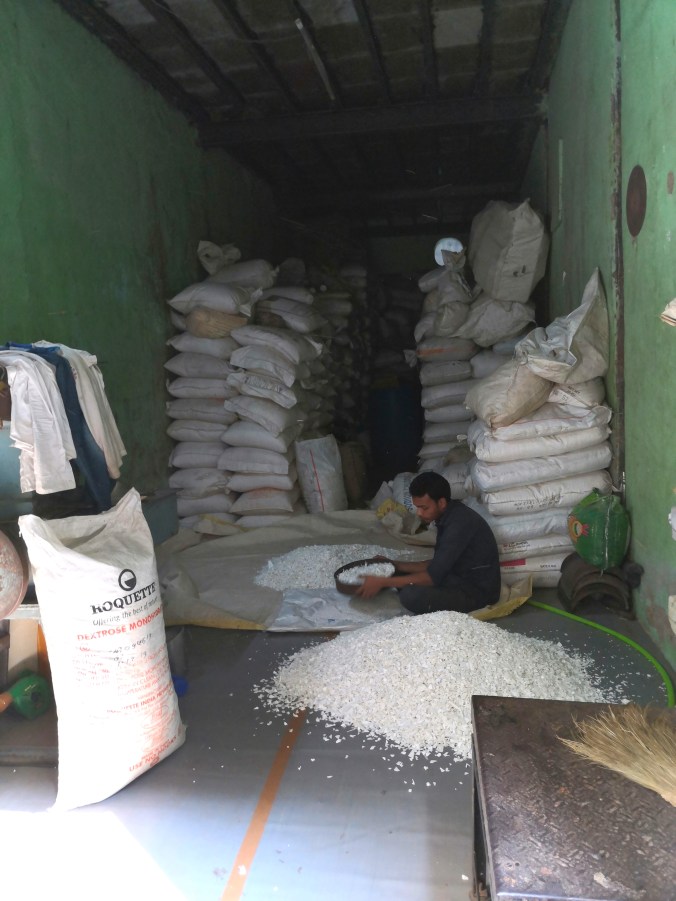
More than a residential area, Dharavi is also a bustling hub for small-scale industry, generating almost US$1 billion per year. Recycling is one of the most thriving businesses in the area, giving a new life to 80% of plastic waste in Mumbai. Compared to 14% in Hong Kong or 7% in Singapore, it’s an inspiring achievement. Other income generators range from wax printing to leather manufacturing, of which products mainly export to Europe and the US.
“Workers in Dharavi mainly came from the nearby cities,” Mohammed said. “The newcomers or low-skilled ones earn as little as 200 rupees (US$2.65) a day. The owners usually allow them to live in the store. It’s for security reasons and to make sure they’ll be on time for work. During the monsoon season, most of them will go back to their hometown and return when the weather allows.”

Before getting out of a labyrinth of narrow lanes, we passed by an open area fitted with a slide. Two little boys of around 4 years old were picking up bottles and cans; a bunch of older kids was taking turns for the only equipment in the “playground”. Though the children here don’t have many toys to play with, their big smiles and sound of laughter make them seem like the happiest persons in the world. Before we headed away, a girl of around 9 years old came up to us. “Do you have pens?” she extended her little palm. Unfortunately, I couldn’t fulfill this small favor. If you’re thinking to visit the slum after the pandemic, it’d be nice to pack some pens in your bag as small gifts to the little ones.

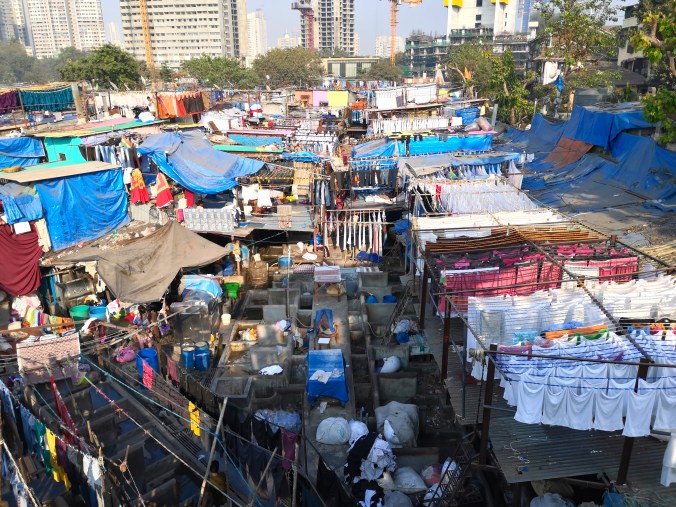
Next up on our itinerary was Dhobi Ghat, an open-air laundry constructed in 1890, with row upon row of concrete cubicles fitted with flogging stones. At the break of dawn, over 7000 workers, aka dhobis, get to their washing pens to flog and scrub clothes before drying and delivering them to all corners of the city. We arrived at 4 pm and it’s too late to see the action. Lines of cleaned clothing were handing on ropes to dry. We’re told the white sheets and towels were probably sent from hospitals and hotels, while the mixed-colored garments belong to the many different homes. If you’ve a good eye, you may wonder why there aren’t any clothespin on the rope. “It’s their smart tricks. The dhobis twisted two ropes together and tuck the corner of the washed clothes in the gaps. It’s more efficient for collection, especially during rainy season,” Mohammed said. “A cubicle costs around 300 rupees per month which is the average daily salary of a dhobi.”
On the way back to our hotel, we drove past the Antilia, the most expensive private residence in the world, owned by Indian billionaire Mukesh Ambani. The 27-story building consists of three helipads, a ballroom, a theatre, and even a temple. Huge and extravagant, it looks more like a hotel than a home for a family of six. We all have absolute rights to choose how to spend our money, and the wealth gap in India is far from a surprising issue to speak of. But seeing the Antilia within 20-min drive away from Dhavari still made me speechless.
 Crystal on the journey