Nicknamed “the red city”, with buildings constructed in red sandstone and walls made of orange-red clay and chalk, Marrakesh is one of the most popular destinations in Morocco. For those who wants to get there from Casablanca – home to the largest mosque in North Africa – like we did, the train ride operated by ONCF takes around three hours. To guarantee your seat, purchase your train ticket at least a day in advance at the station, especially if you want to travel in the first class cabin which only costs a few US dollars extra.
Marrakesh is divided into two parts: the New City, a modern neighborhood where you can find brand-named shops, fancy restaurants, and Marrakesh railway station; and the Old City (medina) – imagine the Arab market depicted in the Disney movie Aladdin. Looking for some unique, exotic Moroccan experience, we chose to stay in the heart of the medina. Our riad is only a stone away from Jemaa el-Fna, the main square of the city, filled with dozens of juice stalls, trolleys of leather goods and tagine pots, and a couple of snake charmers. The freshly-squeezed juices here are the cheapest I’ve ever found, only 4DHS (0.4USD) for an orange juice and 5DHS for other fruit options. I ordered a kiwi juice but somehow it also looked like and tasted like orange.
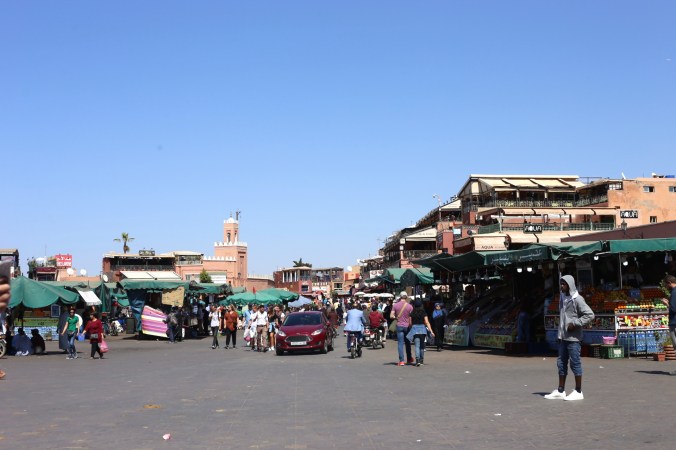

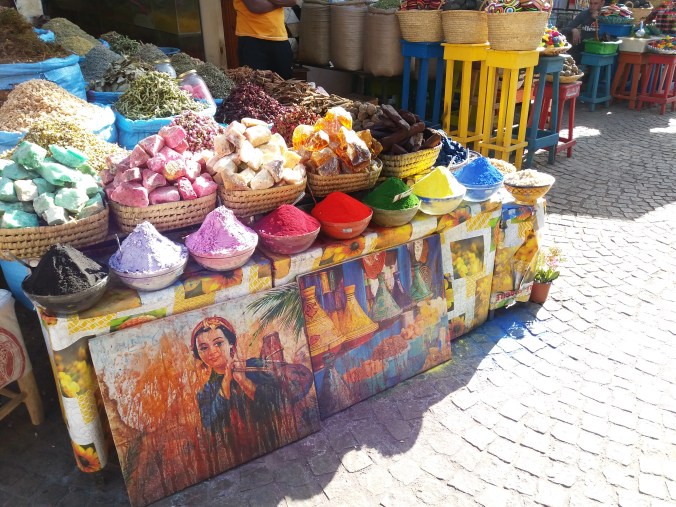
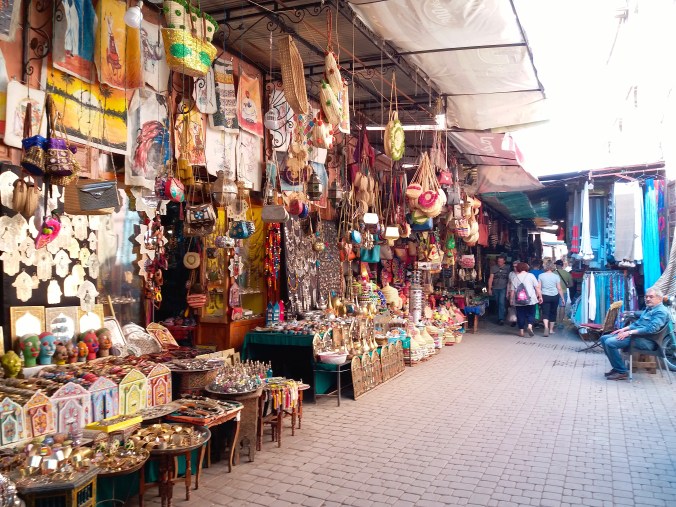
Selling a plethora of artefacts and local products, from brass lamps and hand-woven carpets to traditional Moroccan babouches (leather slippers) and aromatic spices, the souk (traditional market) in Marrakech is the largest in the country. It’s a heaven for souvenirs hunting, but the labyrinth-like alleyways and aggressiveness of shopkeepers could be overwhelming. Thanks to GPS and Google Maps, we’ve already saved ourselves a lot of trouble. If you really get lost, local people are happy to help you out with a small fee. Be sure to negotiate before you let him lead the way. When it comes to those pushy shopkeepers, kindly say the magic words “La shukran”, meaning “No, thank you.” They’re more easy-going and friendly if you use their language.

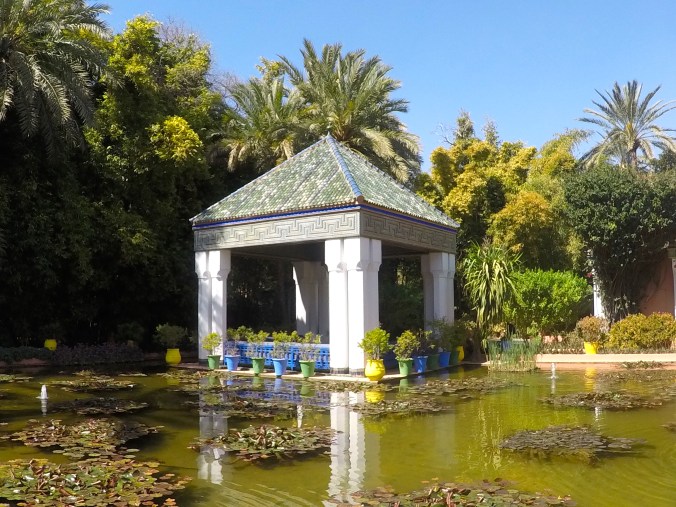
Among all the tourist spots, the most crowded one is the Majorelle Garden, a two and a half acre botanical garden created by French artist Jacques Majorelle in 1923. It served as the home of the artist for around 30 years and was purchased and restored by fashion designer Yves Saint-Laurent in the 1980s. We’re in line for almost an hour under the sizzling sun before we finally reached the ticket counter. The admission fee to the garden is 70DHS, extra 30DHS for the Berber Museum. If you’re also interested in visiting the Yves St Laurent Museum next-door, combined tickets are available at the museum, which usually has a shorter queue.
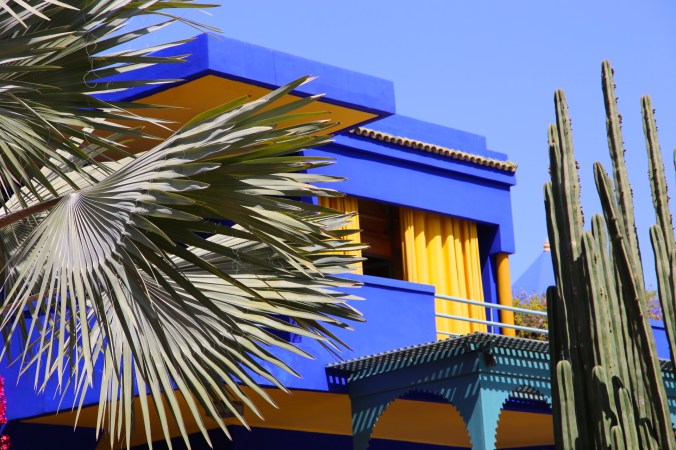
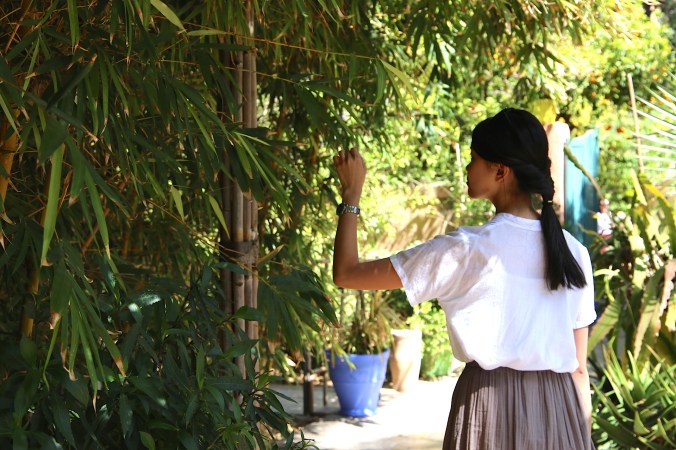
Compared to the meticulously-crafted gardens in those European palaces, the Majorelle Garden shows more of its wild side, home to a wide variety of exotic plants, from palm trees and bamboos to water lilies and a distinctive collection of cacti. The major drawcard of the botanic garden is its contrasting color theme of blue and yellow, best illustrated by the Berber Museum. Your experience there is not complete without being photographed in front of the blue wall and yellow window frame.

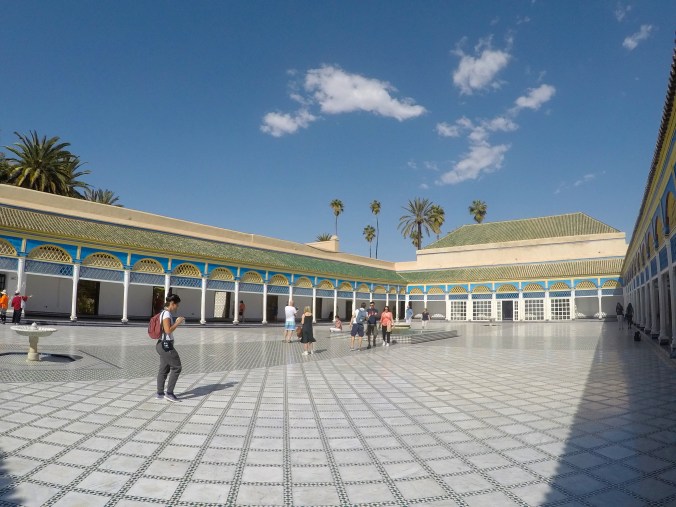
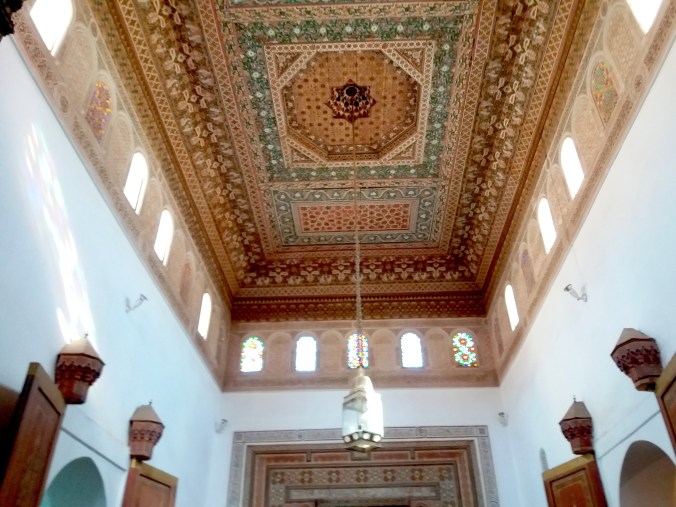
After sating our appetite at a Spanish restaurant nearby, we took a 15-min taxi ride to another popular site named Bahia Palace. Meaning “brilliance” in Arabic, the palace was built at the end of the 19th century as a personal residence owned by Si Moussa, Grand Vizier of the Sultan. It was then taken over by Bou Ahmed who embellished the palace to an extent that you can see today. Decorating with a central basin and white marble floors, the grand courtyard, surrounded by rooms shared by the slave-turned-vizier’s concubines, is one of the most charming features of the palace. Also watch out for the delicately sculpted and painted wooden ceilings, Zellig-tiled fireplaces, and stained-glass windows that reflect colorful patterns on the wall under the wash of the afternoon sun.


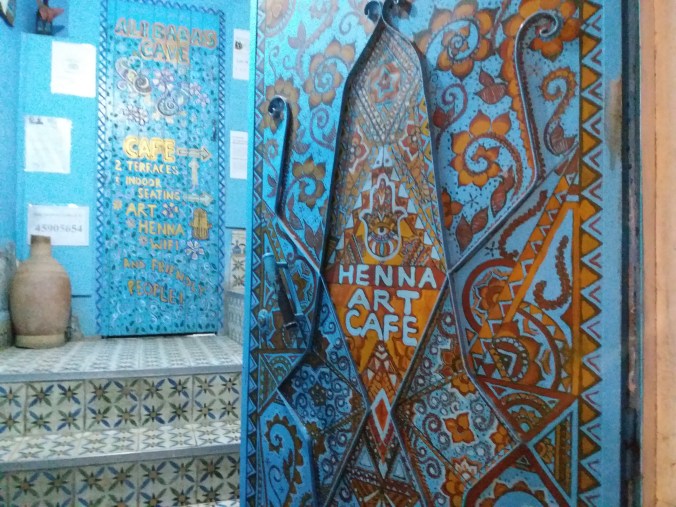
For restaurant recommendations, there’s an artistic space named Henna Art Café, where you can enjoy tasty Moroccan dishes and get your henna done by professional artists. If you’ve already fed up with tagines after a few days in Morocco (I get you), look for Naranj, a Middle Eastern restaurant serving amazing Lebanese cuisine. It’s a little bit pricey but worth it.
 Crystal on the journey