Four years ago, I threw a coin into the Trevi fountain wishing for a chance to return to Rome, a beautiful city that I didn’t have enough time to discover as I was on a crazy ten-days-six-countries tour with my mum. Thanks to my flight duty, I came back to this charming capital of Italy in early September. Instead of visiting those overcrowded tourist spots once again, I made a journey to Tivoli, a historic hill town in the Lazio region, seeing two UNESCO World Heritage Sites: Villa d’Este and Hadrian’s Villa (Villa Adriana in Italian.)
Getting up early in the morning, I took the metro to the Ponte Mammolo station, from where you can buy a Cotral bus ticket to Tivoli, and the bus terminal is just one level up. Taking around 35 mins, the ride was quite bumpy and the noise of the engine can easily cause you a headache. But the worst of all was the disgusting sight of plastic bottles, aluminum cans, beer bottles and plastic bags flanking the highways. Anyway, it’s still worth to see the two ancient sites even though the way along isn’t that pleasant.
As there was no signage on the bus, it’s better to approach the driver earlier to ask for the stop. He may not be able to understand English but he should be able to catch the name of ‘Villa d’Este’. The villa is around five mins walk from the station. It was still early and the queue wasn’t long. Each ticket costs €8,00, but for some reason, the price reduced to € 1,00 on my visit. (so lucky!)
Combining a fascinating variety of fountains, an exquisite palace with meticulous ceiling works and beautiful gardens, Villa d’Este is a 16th-century villa that illustrates the best of Renaissance culture. Distinct from the Trevi Fountain or the Colosseum, the villa mainly attracts European tourists. In the two hours that I spent inside, I could see only a few Asian faces. I wasn’t surprised as a majority of travel agencies in Hong Kong only put Rome, Florence, Pisa, and Venice in their Italian tour itineraries.
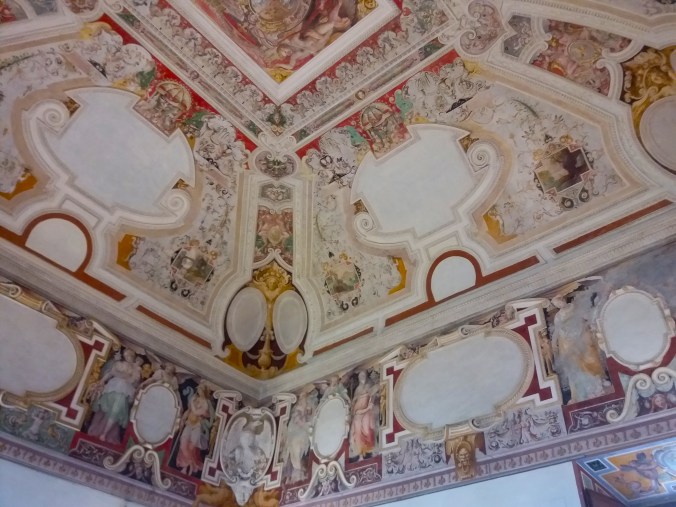
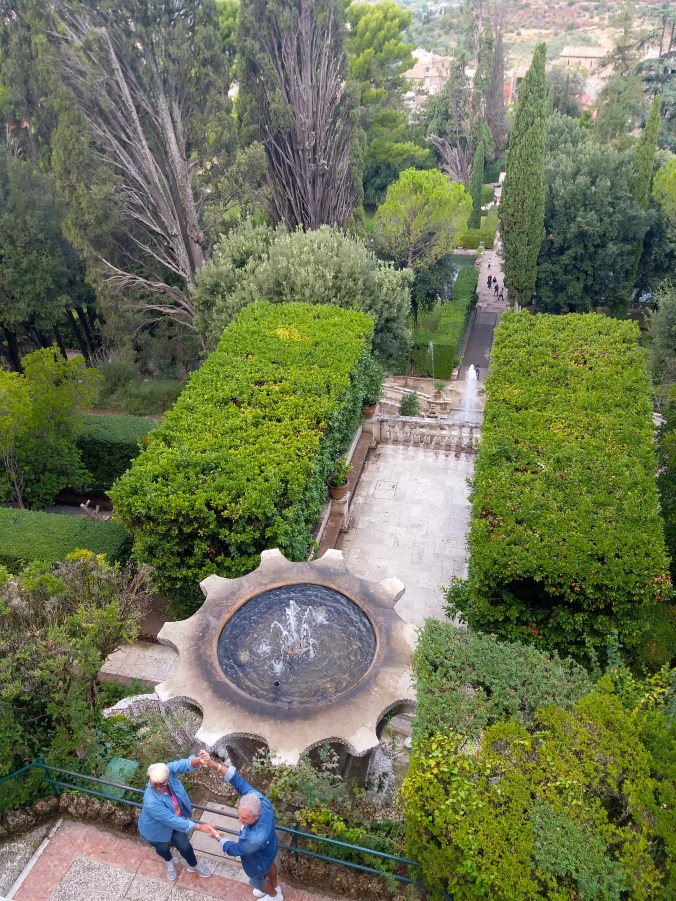


When you’ve worked up your appetite, a lineup of restaurants is just around the corner outside the villa. Having filled up my stomach, I set off for Hadrian’s Villa, which is of a totally different style compared to Villa d’Este. There is no colorful, delicate art pieces or even a proper building. What you can see there are ruins – of the color of sandstone.
Getting there was complicated and frustrating for me. I should have caught the local bus route 4, however, it was nowhere to be seen after I’ve been waiting for 45 mins. At last, I got on a Cotral bus mistakenly. Thanks to the help of a gentleman standing next to me, I managed to get off at a stop 30 mins walk from the Hadrian Villa. Though there was a huge language barrier, I still so appreciate the helpfulness of Italian people.
Hadrian’s Villa was an extravagant retreat for Roman Emperor Hadrian during the second and third decades of the 2nd century AD. Before stepping into the main historic area, head to the information center, where you can have an idea of how the villa looked before the decline of the Roman Empire.

Showcasing the architectural heritage of Egypt, Greece and Rome, the archaeological site includes temples, theatres, baths, libraries, and fountains. Although those are now broken ruins, you can still think of how grand and marvelous it was some 2000 years ago. (I recommend you to watch the reconstruction video from youtube to spark your imagination.) Make sure you wear something comfortable as the trip involves a great deal of walking.


 Crystal on the journey